

This post contains affiliate links. If you buy through one, we may earn a commission at no extra cost to you. See our [Affiliate Disclosure] for details.
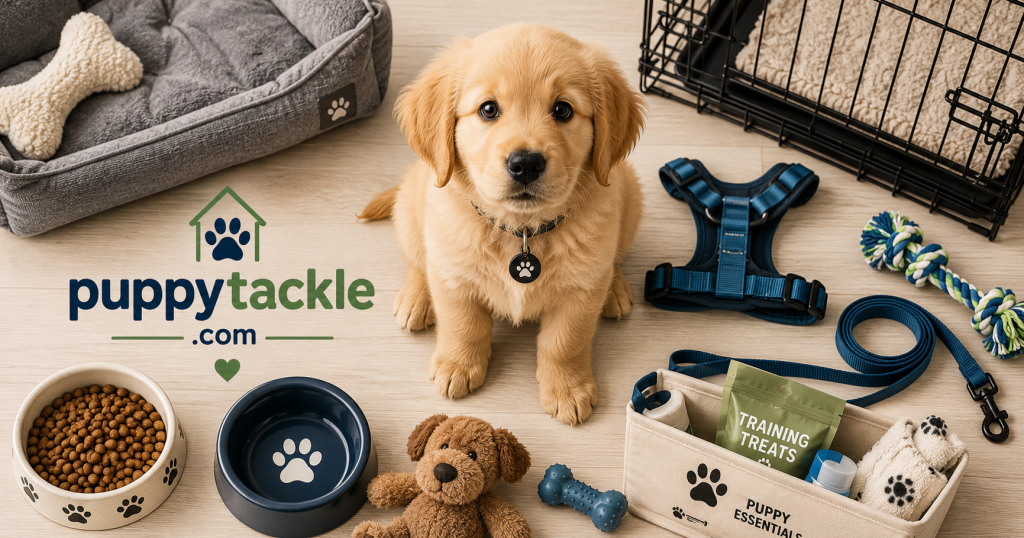
You brought home a puppy, or you’re about to. Either way, you’re standing in the middle of a pet store (or scrolling Amazon at 11pm) staring at forty different crate sizes, seventeen “best” harnesses, and a wall of chew toys, trying to figure out what you actually need versus what’s just marketing.
Here’s the truth: most new owners either buy way too much — stuff that ends up in a closet by week three — or they skip something important because nobody told them it mattered. This list fixes both problems. It’s everything you actually need, organized by category, with a plain answer on why each item matters and what to look for.
No filler. No 47-item “ultimate checklists” padded with things you’ll never use. Just the real starter kit.
The Crate
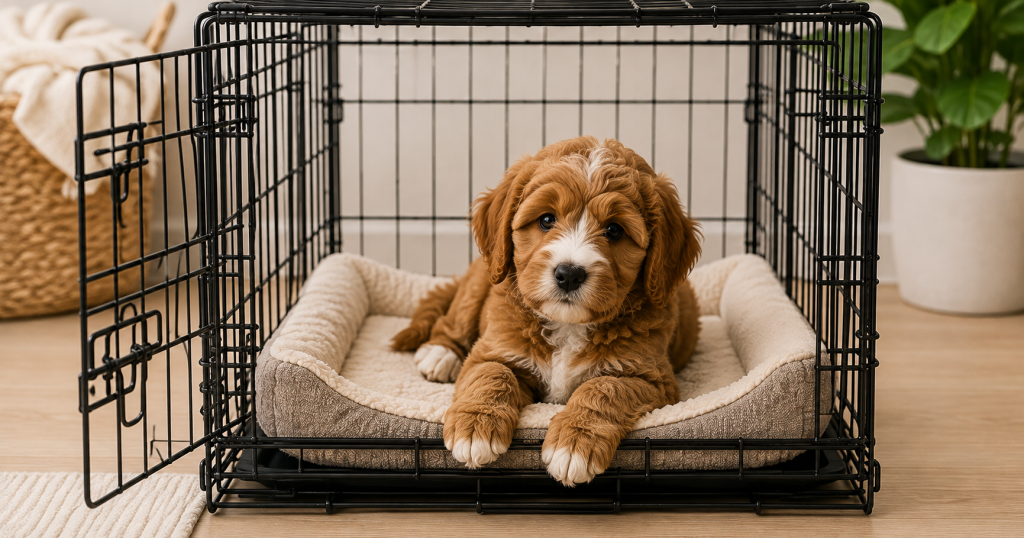
A crate isn’t punishment — it’s your puppy’s den, and it’s the fastest way to make potty training and separation anxiety manageable. Dogs instinctively avoid soiling where they sleep, which is exactly why crate training works.
What to look for: a crate with a divider panel, so you buy one crate that grows with your puppy instead of replacing it three times in their first year. Wire crates give better airflow; plastic crates feel more den-like and travel better.
Skip: decorative crates that look nice but are too small for an adult dog, or crates without a divider — you’ll be buying a second one in six months.
[AFFILIATE: Adjustable wire crate with divider panel — Amazon]
Bed
Your puppy will chew this. Accept it now. Don’t buy the expensive orthopedic bed until they’re past the teething phase (usually 6-8 months).
What to look for: a washable cover, chew-resistant fabric, and a size that matches your crate if you’re using it inside one.
Skip: memory foam beds for young puppies — they’re pricey and won’t survive week one of teething.
[AFFILIATE: Washable crate-size puppy bed — Amazon]
Food & Water Bowls
Simple, but a few things actually matter here.
What to look for: stainless steel over plastic — plastic can harbor bacteria and some puppies develop chin acne from it. If your puppy is a fast, gulping eater, a slow-feeder bowl helps prevent bloat and vomiting.
Skip: bowls that are too deep for a small breed puppy’s snout, and anything not dishwasher-safe (you will not want to hand-wash a dog bowl twice a day).
[AFFILIATE: Stainless steel bowl set — Amazon] [AFFILIATE: Slow-feeder bowl (for fast eaters) — Amazon]
For a full breakdown of what and how much to feed, see our [Puppy Feeding Guide — link pending].
Collar, ID Tag & Harness

This is the one category where cutting corners actually matters. A scared or excited puppy can slip a collar shockingly fast, and a lost puppy without ID is a nightmare.
What to look for: a properly fitted flat collar for everyday wear and ID, plus a harness for walks — harnesses reduce strain on a puppy’s developing neck and trachea and give you better control if they lunge. Look for adjustable sizing since puppies grow fast.
Skip: retractable leashes for puppies (they teach pulling, not loose-leash walking) and collars without a quick-release buckle.
[AFFILIATE: Adjustable puppy harness — Amazon] [AFFILIATE: Basic ID tag with engraving — Amazon]
If you’re dealing with a puppy that pulls hard, bolts, or needs a containment solution like a wireless fence as they get older, PetSafe makes some of the most trusted gear in this category — worth a look once you’re past the basics.
[AFFILIATE: PetSafe containment/training gear — PetSafe]
Chew Toys (Actually Puppy-Safe Ones)
[IMAGE] Suggested shot: puppy actively chewing a rubber or rope teething toy. Alt text: “Puppy chewing on a puppy-safe teething toy”
Teething starts around 3-4 months and it is relentless. The goal isn’t to stop the chewing — it’s to redirect it before your shoes become the target.
What to look for: a rotation of textures — something rubbery, something rope-based, something for freezing (frozen textured toys soothe sore gums). Rotate 2-3 toys at a time so nothing gets boring.
Skip: anything with small parts that can be chewed off and swallowed, and rawhide, which can pose a choking/blockage risk for puppies especially.
[AFFILIATE: Puppy teething toy set — Amazon]
Potty Training Supplies
Whether you’re doing pads, grass patches, or straight to outside, you need a real plan here — see our full [Potty Training Guide — link pending] for the schedule and method. But regardless of method, you need:
Enzymatic cleaner — regular cleaners don’t fully remove the scent markers that make a puppy return to the same spot. This is not optional if you want potty training to actually stick.
Poop bags — buy in bulk now, you’ll go through more than you think.
[AFFILIATE: Enzymatic pet stain/odor remover — Amazon] [AFFILIATE: Bulk poop bags — Amazon]
Grooming Basics
[IMAGE] Suggested shot: puppy being brushed, showing the slicker brush in use. Alt text: “Puppy being groomed with a slicker brush”
Even short-haired breeds need a basic grooming kit, and starting early gets your puppy comfortable with being handled — which makes vet visits and nail trims dramatically easier later.
What to look for: a slicker brush appropriate for your puppy’s coat type, puppy-safe nail clippers or a grinder, and a puppy shampoo that won’t dry out their skin.
Skip: human shampoo (wrong pH for dog skin) and adult-dog nail clippers, which are often too large to use safely on tiny puppy nails.
[AFFILIATE: Puppy grooming kit (brush, clippers, shampoo) — Amazon]
The Quick-Reference List
[CUSTOM GRAPHIC — build in Canva, this is your Pinterest pin] This is the highest-priority image in the whole post. Design a vertical (1000x1500px) graphic with the checklist items below, using your Puppy Tackle fonts/colors. This is what people actually save and re-pin on Pinterest. Alt text: “Puppy starter kit checklist — crate, bowls, harness, toys, grooming supplies”
Screenshot this part:
- Crate with divider panel
- Washable crate bed
- Stainless steel food & water bowls
- Slow-feeder bowl (if fast eater)
- Adjustable harness
- Flat collar + ID tag
- 2-3 rotating chew toys
- Enzymatic cleaner
- Poop bags (bulk)
- Grooming kit (brush, clippers, shampoo)
FAQ
Do I need all of this before day one? No. Crate, bowls, collar/ID, and a couple of chew toys cover day one. Grooming tools and a bigger toy rotation can wait a week or two.
How much should I expect to spend on starter gear? Budget roughly $150-$300 for a full setup depending on brand choices and puppy size — the crate and harness are usually the biggest line items.
What’s the one thing people forget to buy? Enzymatic cleaner. Nobody thinks about it until they need it, and by then the smell has already set into the carpet.
Want the full picture before puppy comes home? Check out our [Complete New Puppy Checklist — link pending] for everything beyond gear, including feeding, training, and what that first vet visit actually costs.