This post contains affiliate links. If you buy through one, we may earn a commission at no extra cost to you. See our Affiliate Disclosure for details.
You just found out you’re bringing home a puppy — or you already did, and you’re realizing nobody actually told you everything that comes next. Between gear, feeding, vet visits, insurance, and training, it’s a lot to figure out in a short window, and most “puppy checklists” online either skim the surface or bury you in generic filler.
This is the real version. Everything you need, organized by what actually matters and when it matters, with links to the full breakdown on anything you want to go deeper on.
Before Puppy Comes Home
The week before pickup is about two things: puppy-proofing your space and having the essentials ready so day one isn’t a scramble.
Puppy-proof the basics:
- Secure or remove anything chewable at floor level — cords, shoes, small objects
- Block off any stairs or rooms you’re not ready to supervise yet with a baby gate
- Store household chemicals, medications, and anything toxic to dogs (including certain plants) out of reach
- Decide where the crate will live before puppy arrives — usually a quiet but not isolated corner
Have ready before day one:
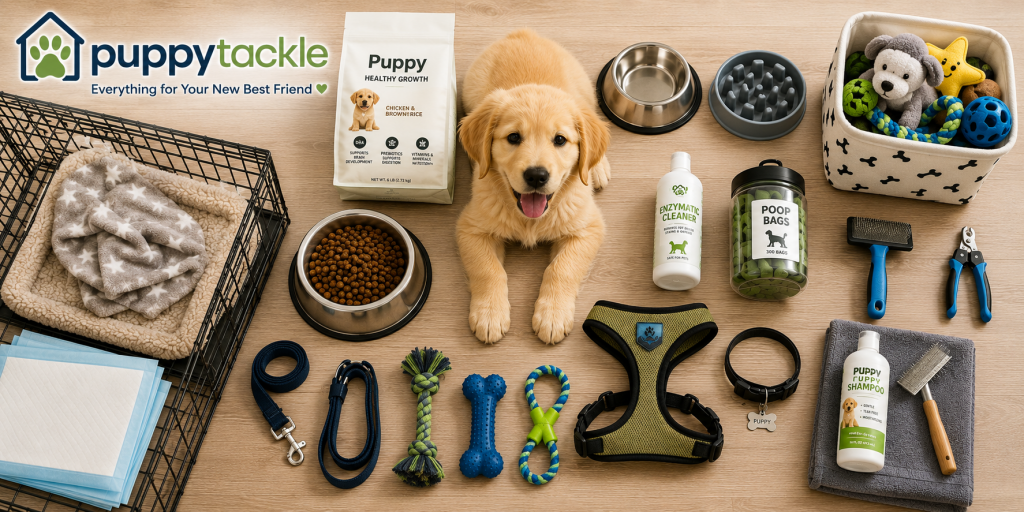
- Crate, bed, food and water bowls, collar with ID tag, a leash and harness, and a few appropriate chew toys
For the full breakdown of exactly what to buy, what to skip, and what to look for in each item, see our Puppy Starter Kit guide.
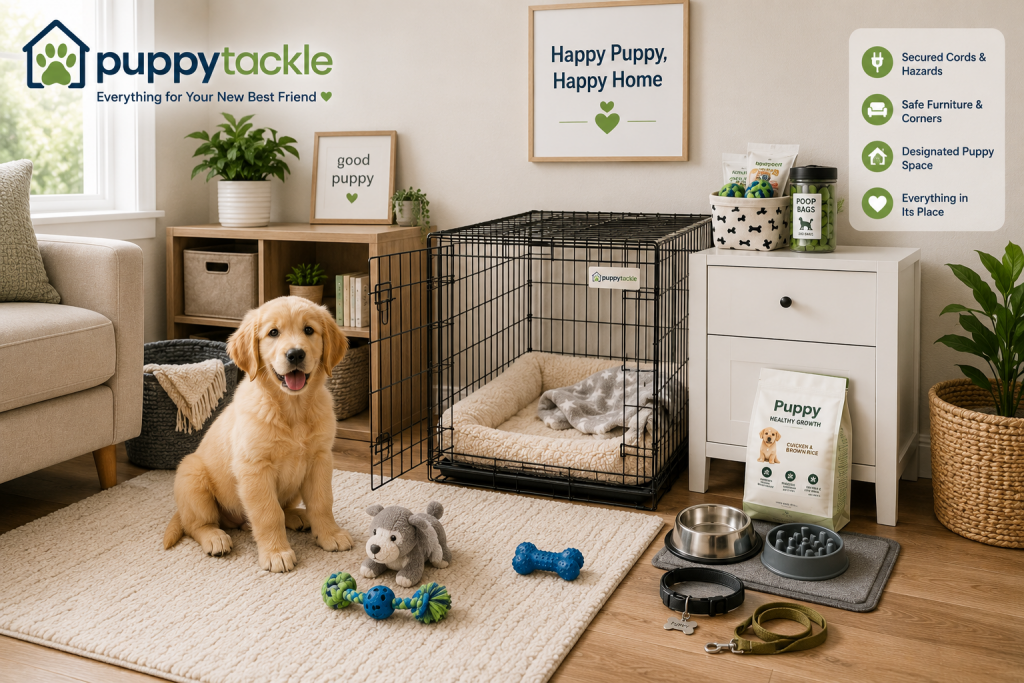
Full puppy starter gear collection
The First Vet Visit — And What It Actually Costs
Schedule your first vet visit within the first few days of bringing your puppy home, even if they seem perfectly healthy. This visit typically covers an initial health check, the start of the AVMA-recommended vaccine series, and a conversation about spay/neuter timing and parasite prevention.
Budget for this stage: initial vet visits and the full vaccine series commonly run $200-$500 depending on your location and vet, before spay/neuter, which adds another $150-$700.
This is also the ideal window to think about pet insurance — coverage is broadest when you enroll before anything has a chance to show up on a vet record. For the full cost breakdown across the entire first year, plus how to decide if insurance makes sense for you, see our Cost to Own a Puppy guide.
Feeding Your Puppy
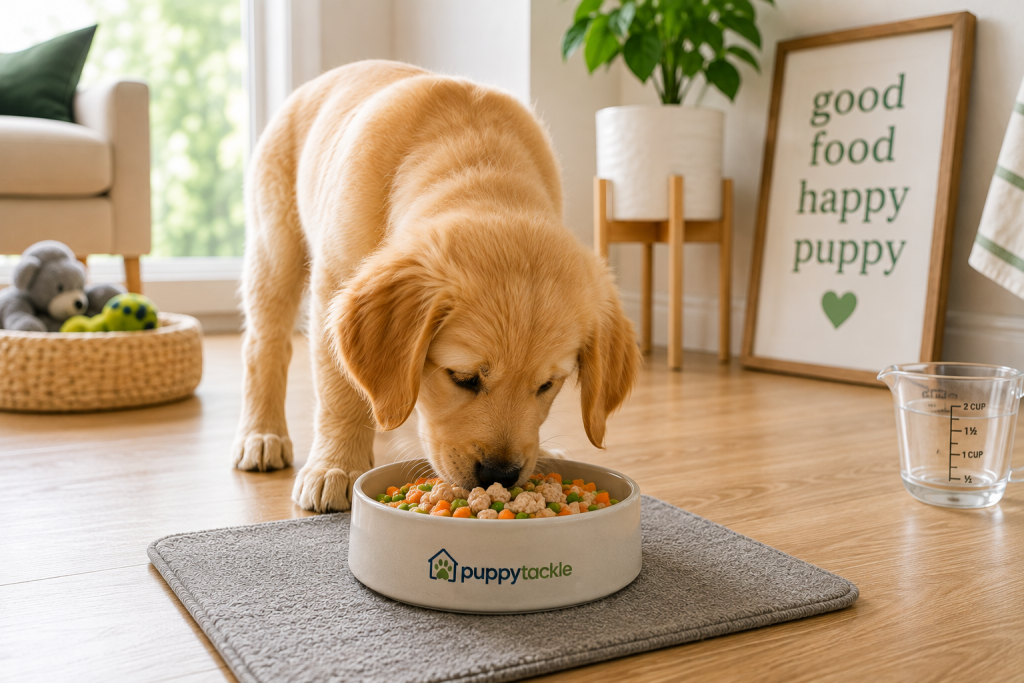
Puppies need food formulated specifically for their life stage — not adult dog food — because they require different levels of protein, fat, and calories to support rapid growth. Most puppies eat 3-4 times a day up until around 6 months, then transition to twice a day.
The bigger decision most new owners face is kibble versus fresh food, and the honest answer is that a complete, well-formulated version of either can support a healthy puppy — the real difference comes down to budget, convenience, and whether your puppy has any specific sensitivities. We break the whole comparison down, cost included, in our Fresh Food vs. Kibble guide.
Training: Potty, Crate, and Beyond
The first few weeks of potty training are genuinely intensive — expect to take your puppy out roughly every 1-2 hours at first, tightening or loosening that schedule based on age and how consistently they’re succeeding. Crate training and potty training work together: a properly introduced crate becomes the tool that makes the schedule actually stick.
For the full age-based schedule, what to do about accidents, and the most common mistakes that slow this process down, see our Potty & Crate Training guide.
If you want a more structured program that goes beyond potty training into obedience and behavior, Brain Training for Dogs is a well-regarded at-home curriculum worth a look.
Gear Beyond the Basics
Once the essentials are covered, a few other things tend to come up in the first couple of months:
- Baby gates for containing your puppy to puppy-proofed areas while you’re not directly supervising
- A slow-feeder bowl if your puppy eats too fast
- An enzymatic cleaner — non-negotiable for potty training accidents, since regular cleaners don’t fully remove the scent that draws a puppy back to the same spot
- A grooming starter kit (brush, puppy-safe nail clippers, puppy shampoo) to get them comfortable being handled early
Full detail on all of this, including what to skip, is in our Puppy Starter Kit guide.
The Complete Checklist (Quick Reference)
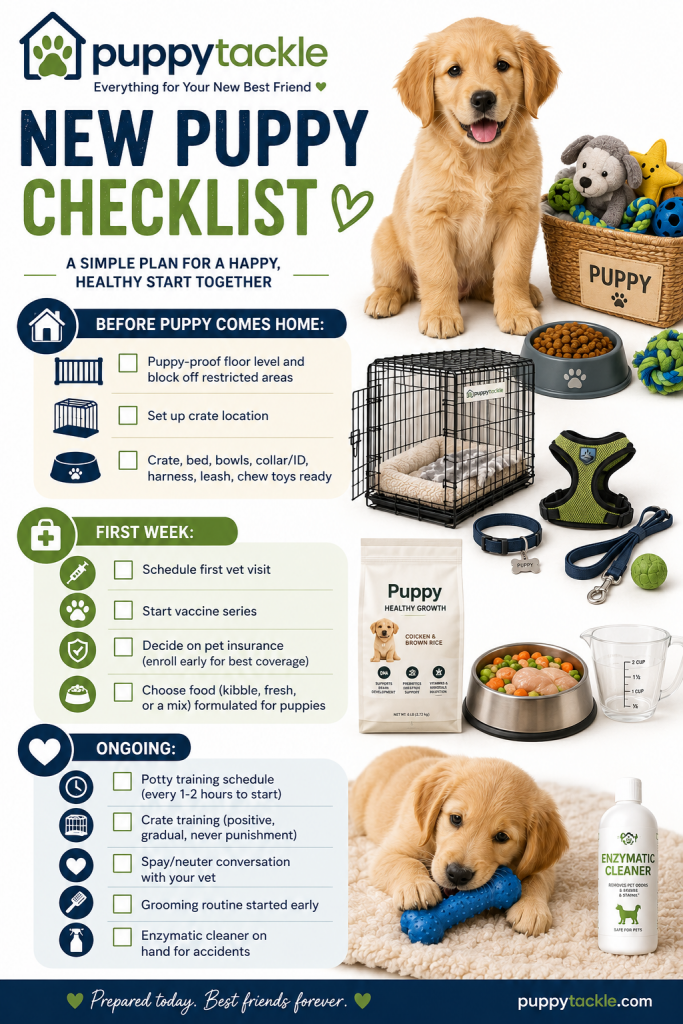
Before puppy comes home:
- Puppy-proof floor level and block off restricted areas
- Set up crate location
- Crate, bed, bowls, collar/ID, harness, leash, chew toys ready
First week:
- Schedule first vet visit
- Start vaccine series
- Decide on pet insurance (enroll early for best coverage)
- Choose food (kibble, fresh, or a mix) formulated for puppies
Ongoing:
- Potty training schedule (every 1-2 hours to start)
- Crate training (positive, gradual, never punishment)
- Spay/neuter conversation with your vet
- Grooming routine started early
- Enzymatic cleaner on hand for accidents
FAQ
What’s the very first thing I should buy? A crate. It’s the foundation for both potty training and giving your puppy a safe space from day one — everything else can be sorted in the days right around pickup.
How much should I expect to spend in the first year? Realistically $1,100-$3,900 depending on breed size, insurance choices, and whether anything unexpected comes up. The full breakdown is in our Cost to Own a Puppy guide.
When should I start training? Immediately — potty and crate training start the day your puppy comes home. Formal obedience training can start as early as 8 weeks with short, positive sessions.
Do I really need pet insurance? Not everyone does, but it’s worth seriously considering, and if you do want it, enrolling early (before any conditions show up on a vet record) matters more than almost any other timing decision you’ll make. Full reasoning in our Cost to Own a Puppy guide.
This page is general informational content, not veterinary, financial, or insurance advice. Talk to your vet about your puppy’s specific needs, and compare providers directly for exact pricing and terms.