This post contains affiliate links. If you buy through one, we may earn a commission at no extra cost to you. See our Affiliate Disclosure for details.
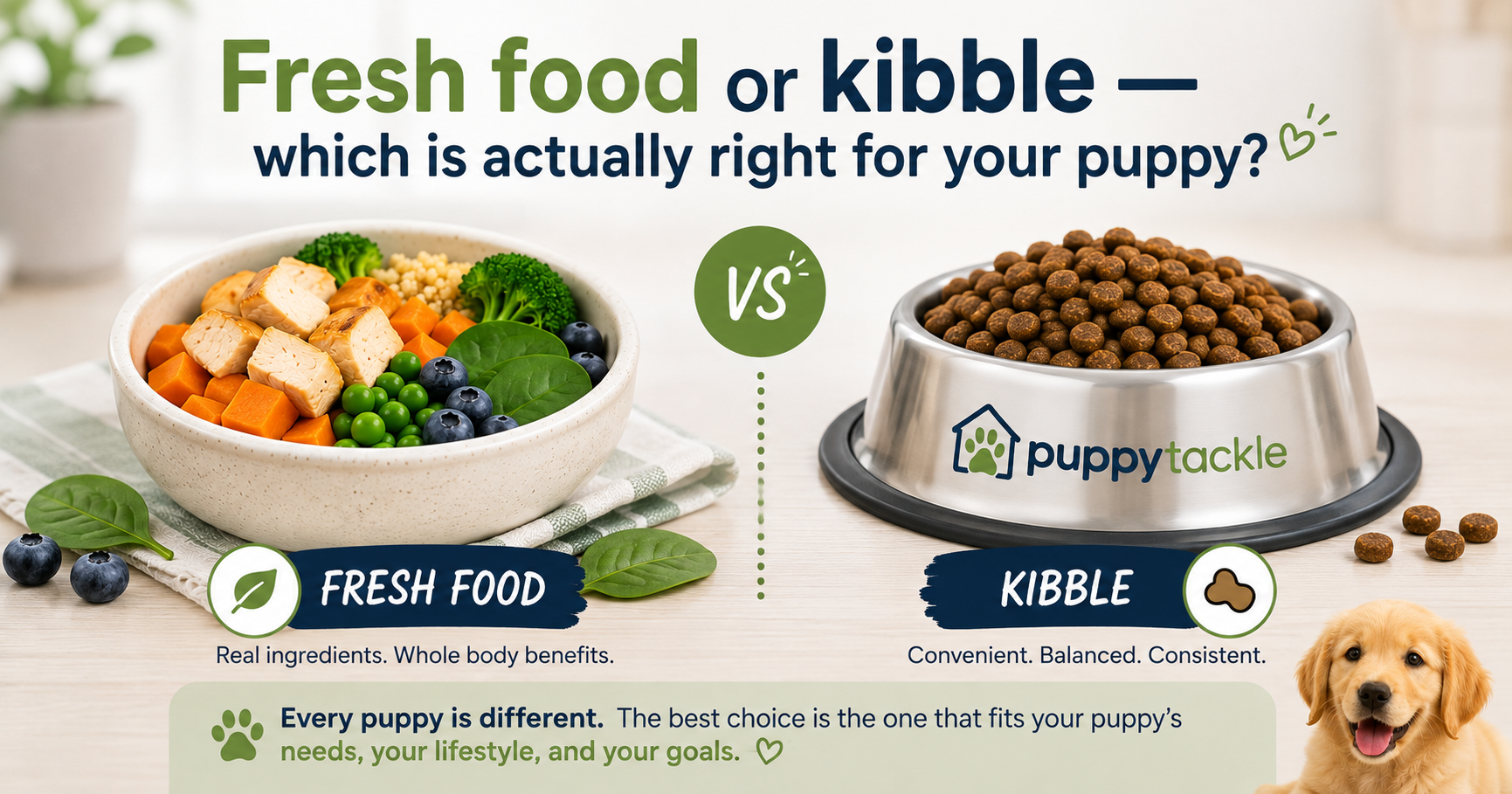
Walk into any pet store or scroll any dog forum and you’ll find someone with a strong opinion on this. Kibble people think fresh food is an overpriced trend. Fresh food people think kibble is barely food at all. Neither extreme is telling you the whole truth. Here’s the actual comparison, without the brand bias — what each option really is, what it costs, what it does well, and how to decide what’s right for your puppy and your budget. So what’s better: fresh food vs kibble for puppies?
What Kibble Actually Is
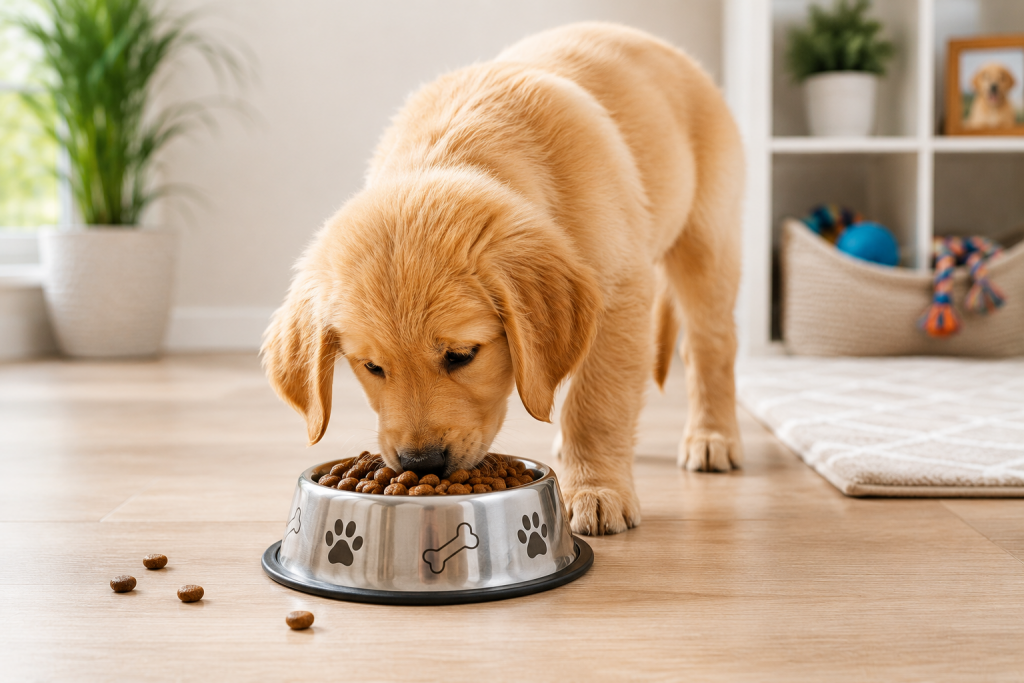
Kibble is cooked, extruded, and dried into a shelf-stable pellet. That process is exactly why it’s affordable and convenient — it can sit in a bag for months without refrigeration, it’s easy to portion, and it’s available everywhere from grocery stores to Chewy.
Where kibble does well:
- Cost — significantly cheaper per feeding than fresh options
- Shelf life and convenience — no fridge/freezer space, no meal prep
- Consistency — same formula, same nutrition, every bag
- Dental benefit — the crunch can help reduce tartar buildup somewhat (though it’s not a substitute for actual dental care)
Where it falls short:
- Quality varies enormously by brand — “kibble” isn’t one category, it spans everything from budget grocery-store bags to premium vet-formulated lines
- Lower moisture content, which matters more for breeds prone to urinary issues
- Some cheaper formulas rely heavily on fillers and byproducts rather than whole ingredients
What “Fresh Food” Actually Means
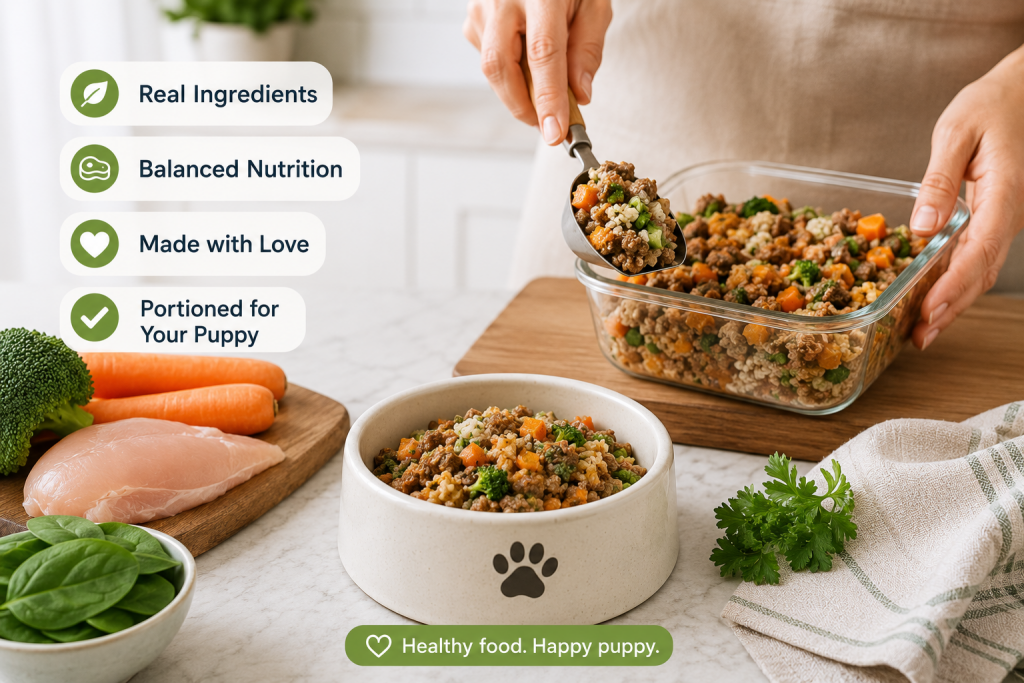
“Fresh food” usually refers to refrigerated or frozen meals made with whole-food ingredients, often delivered as a subscription (this is where brands like Ollie operate) — portioned specifically for your dog’s weight and life stage.
Where fresh food does well:
- Ingredient transparency — you can usually see and recognize everything in it
- Portion-controlled for your specific puppy, which takes the guesswork out of feeding
- Higher moisture content, which some dogs digest more easily
- Often better for dogs with sensitive stomachs or picky eating habits
Where it falls short:
- Cost — this is the big one. Fresh food subscriptions typically run several times the cost of kibble per month
- Requires fridge or freezer space
- Less convenient for travel or if you’re inconsistent with reordering
- Not necessary for every dog — a healthy puppy on a quality kibble isn’t nutritionally “missing out”
The Nutrition Question, Honestly
This is where the internet gets loud and the actual answer is boring: a nutritionally complete kibble and a nutritionally complete fresh food can both support a healthy puppy. “Complete and balanced” (look for that phrase, or an AAFCO statement on the label) is the real marker of quality — not whether the food is dry or fresh.
Where fresh food tends to have a real edge is with dogs who have specific sensitivities, picky eaters who won’t reliably eat kibble, or owners who want more control over exact ingredients. Where kibble holds its own is that a well-formulated one is a completely legitimate, complete diet — not a compromise.
This is general information, not veterinary advice — if your puppy has a diagnosed sensitivity, allergy, or health condition, talk to your vet before switching foods or formats.
Cost Comparison (Roughly)
For a medium-size puppy, expect:
| Monthly Cost (approx.) | |
|---|---|
| Budget kibble | $20-$40 |
| Premium kibble | $40-$90 |
| Fresh food subscription | $60-$300+ |
The gap is real, and it’s the single biggest factor in this decision for most households — not a nutrition gap, a budget one.
Premium puppy kibble or Fresh food subscription
So Which Should You Choose?
Kibble makes sense if: you want the most cost-effective option, your puppy eats it fine, and you’d rather put budget elsewhere (training, gear, insurance).
Fresh food makes sense if: your puppy has a sensitive stomach or is a picky eater, you have room in the budget, or ingredient transparency matters enough to you to justify the cost.
A middle ground a lot of owners land on: primarily kibble, with fresh food used as a topper or occasional addition — you get the cost efficiency of kibble with some of the palatability/moisture benefit of fresh food.
FAQ
Is fresh food actually healthier than kibble? Not automatically — a complete and balanced kibble meets your puppy’s nutritional needs. Fresh food’s advantages are more about ingredient transparency, moisture content, and palatability than a guaranteed health outcome.
Can I switch between the two? Yes, but do it gradually over 5-7 days, mixing increasing amounts of the new food with the old, to avoid stomach upset.
What if my puppy won’t eat kibble at all? Some puppies are genuinely picky. If a puppy is consistently refusing to eat, that’s worth a vet check first — but if they’re just being selective, a fresh food option (even used as a topper) often solves it.
Figuring out the rest of the feeding picture — how much, how often, and when to switch to adult food? Check out our Complete New Puppy Checklist for the full feeding timeline.
Feeding times also drive your potty schedule — see our Potty & Crate Training guide for how the two connect.
Getting your gear sorted first? See our Puppy Starter Kit guide.