This post contains affiliate links. If you buy through one, we may earn a commission at no extra cost to you. See our Affiliate Disclosurefor details.
Written by the Puppy Tackle team — we’ve spent time on the retail and Amazon marketplace side of the pet products industry before starting this site, and we bring that same “does this actually hold up” scrutiny to every pick here.
Most feeding questions aren’t about what to feed — they’re about how much and how often, and the bag’s feeding chart on the back only gets you halfway there. It’s calibrated to an average dog, and your puppy isn’t average, they’re a specific weight, breed, and appetite. The WSAVA Global Nutrition Guidelines — the closest thing the veterinary world has to a shared standard on pet nutrition — back up the same core idea: feeding amounts should be adjusted to the individual animal’s body condition, not just a printed chart.
Here’s the actual schedule, by age, plus how to adjust it for your puppy instead of guessing.
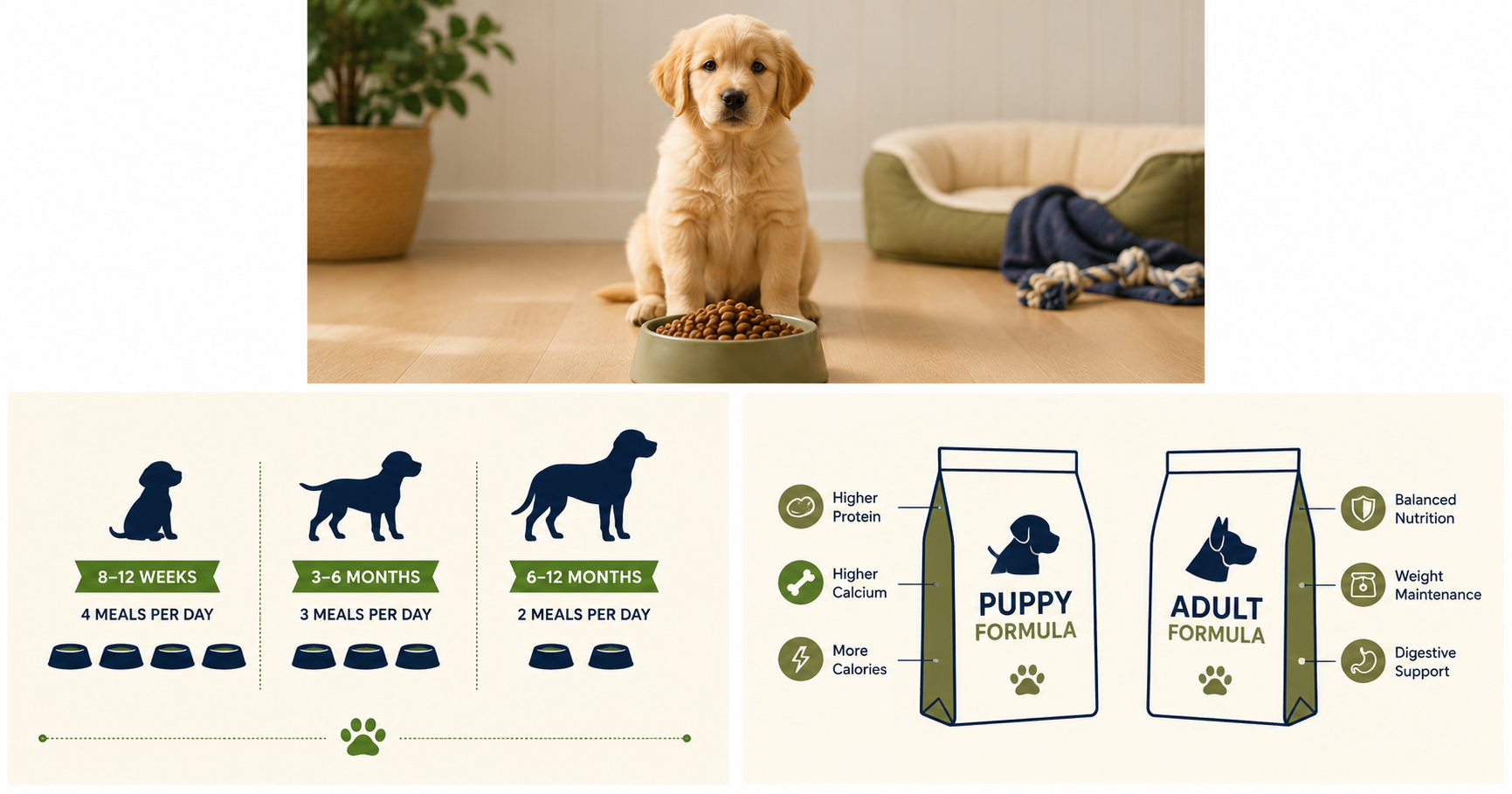
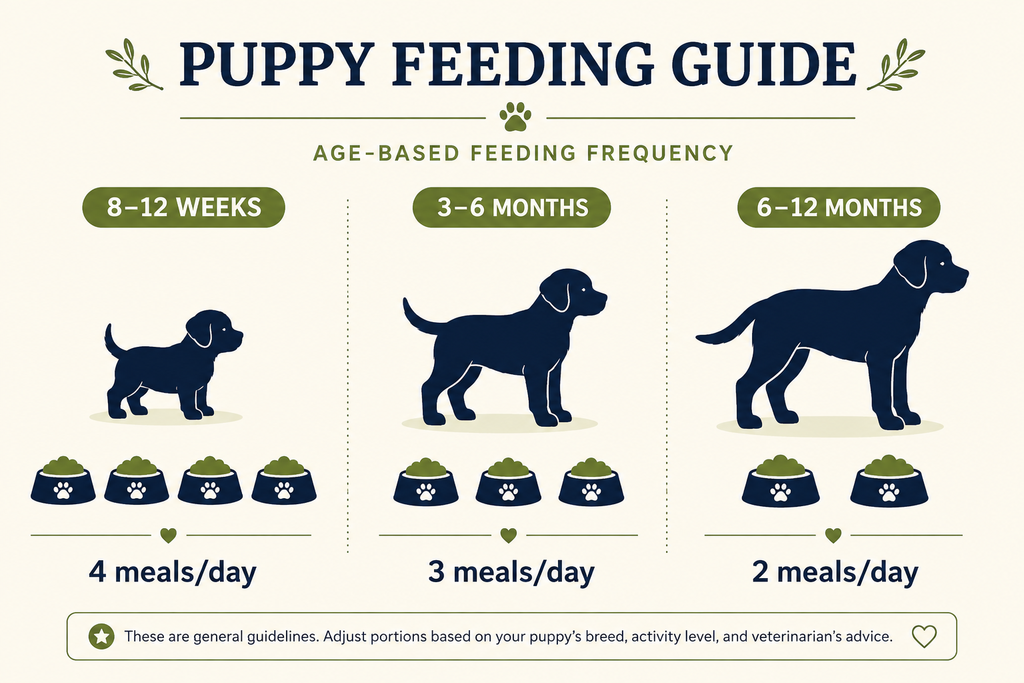
Meals Per Day, By Age
8-12 weeks: 4 meals a day. At this age a puppy’s stomach is small and their blood sugar can drop fast, so frequent small meals matter more than total volume.
3-6 months: 3 meals a day. This is also the window where teething ramps up, so don’t be surprised if appetite dips for a few days at a time — that’s normal.
6-12 months: 2 meals a day. Most puppies can comfortably transition to twice-daily feeding around 6 months, and this is the schedule they’ll likely keep into adulthood.
How Much to Feed, By Weight
Portion size depends on your puppy’s current weight, expected adult weight, and the specific food’s calorie density — which is exactly why the bag’s chart is a starting point, not gospel.
A practical approach:
- Start with the feeding chart on your specific food’s packaging (fresh food and kibble have very different calorie densities, so don’t mix charts between brands)
- Split the daily total evenly across that day’s meals
- Check your puppy’s body condition every 2 weeks — you should be able to feel their ribs without heavy pressure, but not see them
If your puppy is a fast, gulping eater, a slow-feeder bowl helps them actually register fullness instead of overeating in 90 seconds. We cover bowl recommendations in our Puppy Starter Kit guide.
Puppy-formula kibble by weight/breed size
Why “Puppy Formula” Actually Matters
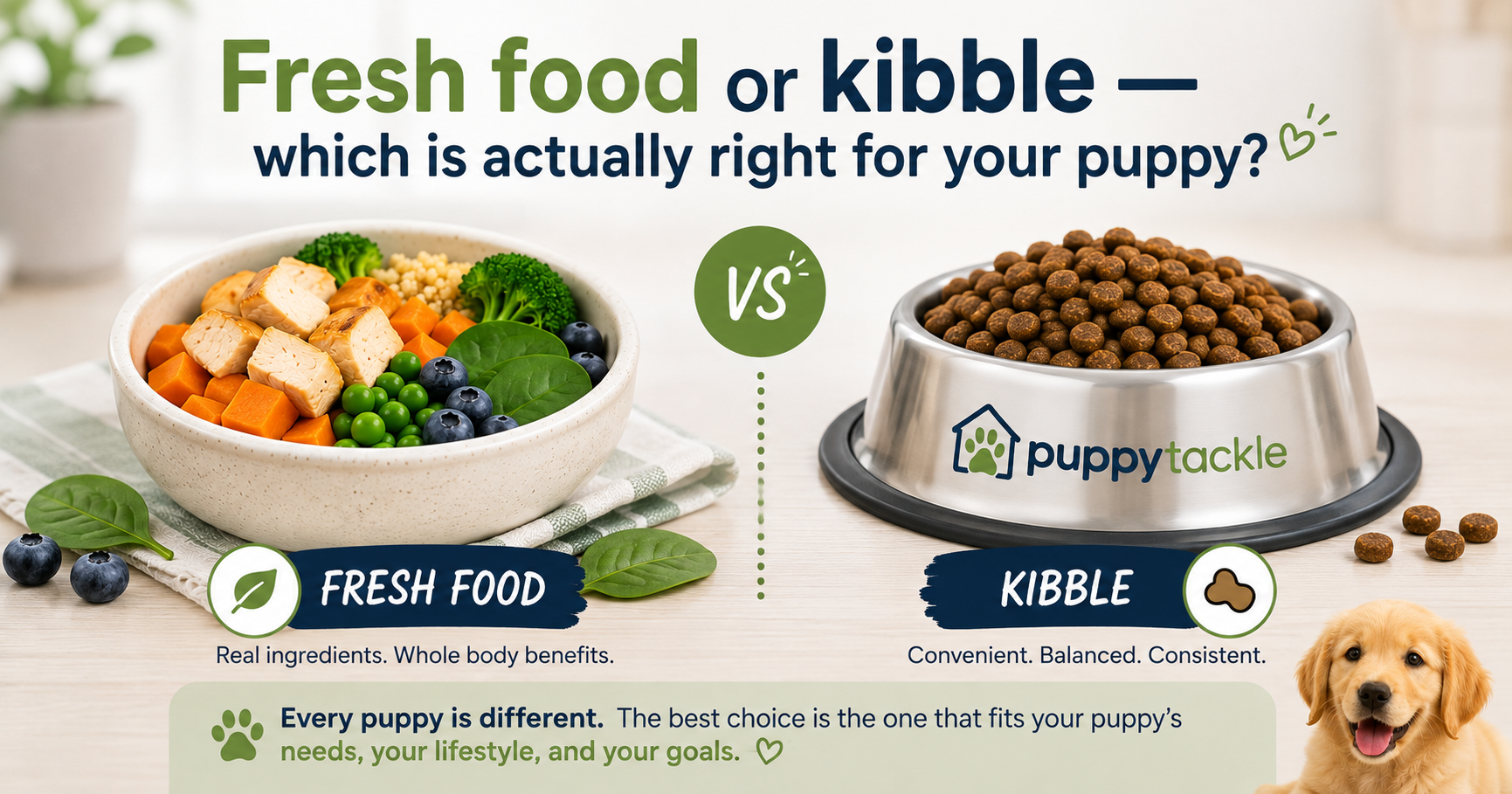
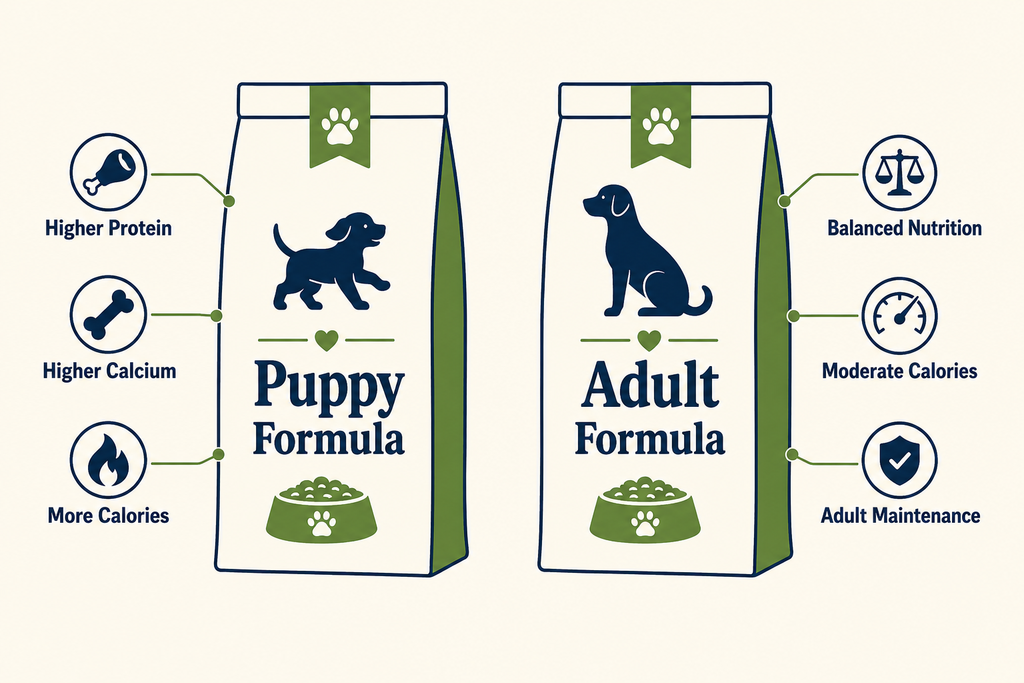
It’s not just marketing. Puppy-specific food is formulated with higher protein, fat, and calcium/phosphorus levels than adult food, to support the rapid bone and muscle growth happening in the first year. Feeding an adult formula too early can shortchange that growth, and feeding an oversized large-breed puppy a regular puppy formula (instead of a large-breed-specific one) can actually cause bones to grow too fast, which raises the risk of joint problems later. If you’re comparing fresh food against kibble more broadly, our Fresh Food vs. Kibble comparison goes deeper on that decision.
Adjusting the Schedule to Your Puppy
The age brackets above are a starting point, not a rule. Two puppies at 4 months can have very different appetites depending on breed size and activity level.
Signs you need to adjust portions up:
- Ribs are easy to see, not just feel
- Puppy seems constantly hungry between meals and is otherwise healthy
- Noticeably low energy that improves after eating
Signs you need to adjust portions down:
- You can’t feel ribs without pressing
- Weight gain is faster than your vet’s growth expectations for the breed
- Regular loose stool without another explanation
Talk to your vet at routine visits about whether your puppy’s weight is tracking appropriately for their breed — this is one of the easiest things to check at a normal appointment.
When to Switch to Adult Food
Most puppies transition to adult food between 12 and 18 months, with larger breeds often waiting closer to 18-24 months since they have a longer growth window. Switching too early can shortchange a still-growing puppy on the calories and nutrients they need.
Make the switch gradually over 7-10 days, mixing in increasing amounts of adult food, the same way you’d handle any food transition.
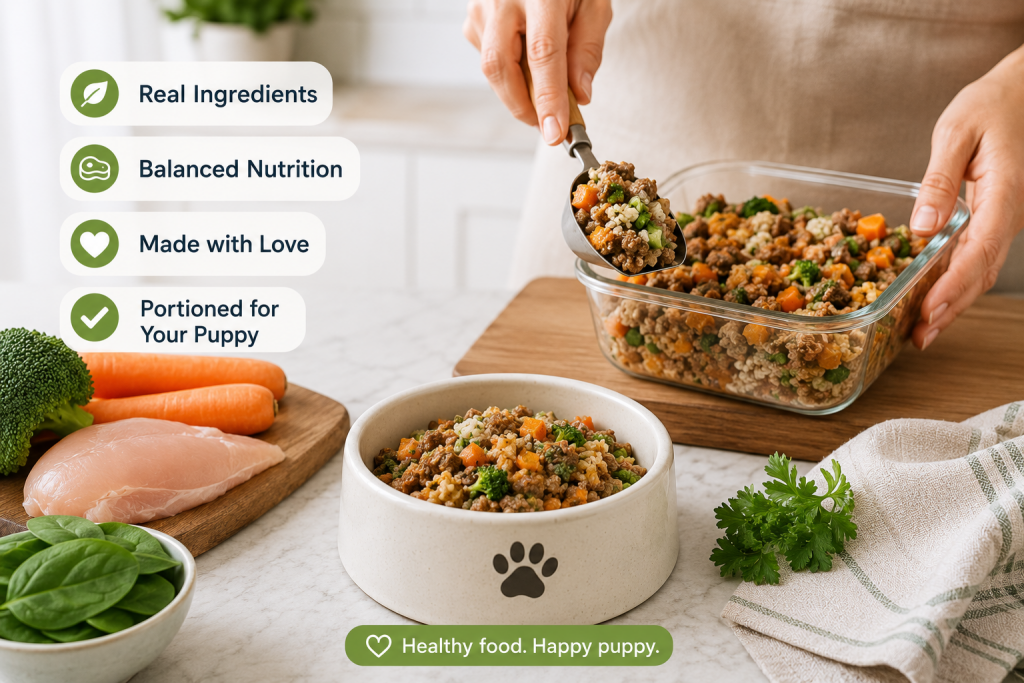
Fresh food subscription, portioned by weight
What Feeding Actually Costs
Food is one of the steadier monthly costs of puppy ownership rather than a one-time purchase, so it’s worth budgeting for rather than being surprised by. Expect roughly $300-$1,000 for the first year on kibble depending on breed size and brand, or noticeably more if you go with a fresh food subscription. See our full first-year breakdown, including food alongside vet costs and gear, in How Much Does It Cost to Own a Puppy?
FAQ
Should I free-feed (leave food out all day) instead of scheduled meals? Scheduled meals are almost always the better choice for puppies — free-feeding makes it harder to potty train on a schedule, since you won’t know when they last ate, and it makes weight gain harder to catch early.
My puppy skipped a meal. Should I worry? One skipped meal from a healthy, active puppy usually isn’t a concern — teething discomfort or excitement can cause this. Multiple skipped meals, or skipping paired with lethargy or vomiting, is worth a call to your vet.
Is it okay to feed a mix of kibble and fresh food? Yes — a lot of owners land here as a middle ground. Just make sure you’re accounting for both when calculating total daily calories, since fresh food is often more calorie-dense per cup than kibble.
Do large-breed puppies really need different food? Yes. Large and giant breed puppies grow fast enough that a regular puppy formula’s calcium and calorie levels can encourage growth that outpaces their joints and bones, raising the long-term risk of orthopedic issues. Look specifically for a “large breed puppy” formula on the label if your puppy is projected to be over roughly 50-70 lbs as an adult.
This post is general informational content, not veterinary or nutritional advice. Talk to your vet about your puppy’s specific feeding needs, especially if you have concerns about weight, growth rate, or appetite.
Still deciding between kibble and fresh food? See our Fresh Food vs. Kibble comparison.
Haven’t sorted your bowls and gear yet? Our Puppy Starter Kit guide covers what to look for.