This post contains affiliate links. If you buy through one, we may earn a commission at no extra cost to you. See our Affiliate Disclosure for details.
Written by the Puppy Tackle team — we’ve spent time on the retail and Amazon marketplace side of the pet products industry before starting this site, and we bring that same “does this actually hold up” scrutiny to every pick here.
Our Puppy Starter Kit guide covers what to look for in a crate generally — a divider panel, decent airflow, and sizing that fits your puppy’s adult weight, not just their current size. The AKC’s step-by-step crate training guide is a solid reference on the training method itself, and pairs with our own Potty & Crate Training guide. This post is the deeper product version: specific picks, by use case, with the actual trade-offs.
What We’re Judging On
Every crate here is scored against four things: does it have a divider panel (so it grows with your puppy instead of getting replaced), is it actually easy to clean, does it hold up to a determined chewer or scratcher, and is the price fair for what you get. We’re not testing based on looks — a crate that photographs well but falls apart in six months isn’t a real pick.
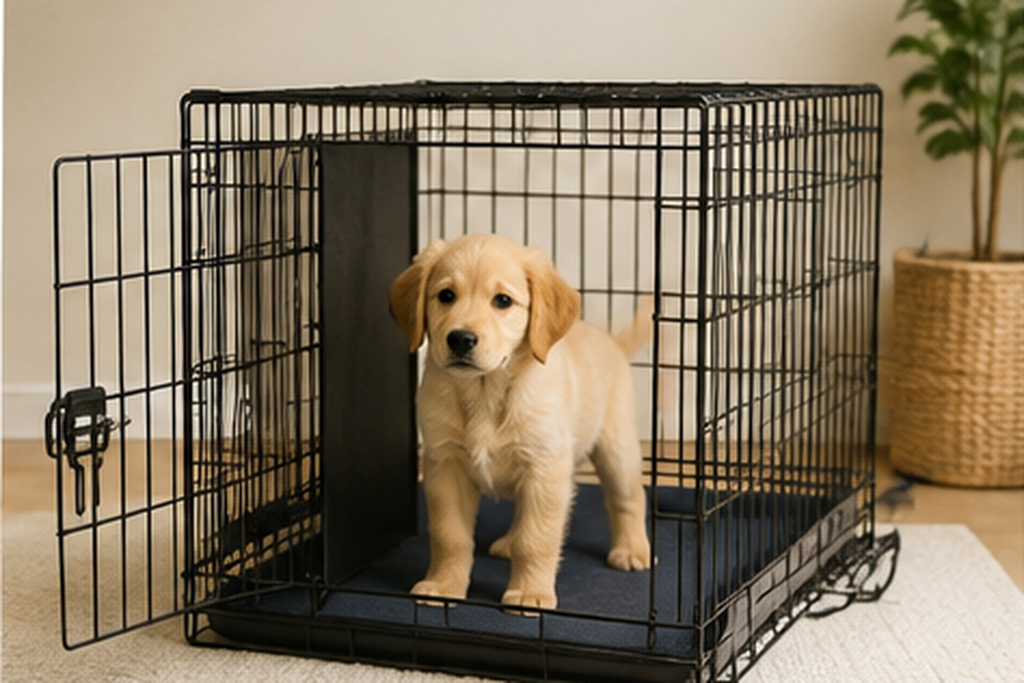
Best Overall: Adjustable Wire Crate With Divider Panel
This is the crate most owners should start with. Wire construction means strong airflow, a divider panel means one purchase covers puppyhood through adulthood, and the open sides make it easy to keep an eye on your puppy without opening the door.
Good for: most puppies, most homes, especially if the crate will live somewhere with regular foot traffic.
Trade-off: less “den-like” than a plastic crate, which can matter for an especially anxious puppy in the first few weeks.
Adjustable wire crate with divider panel
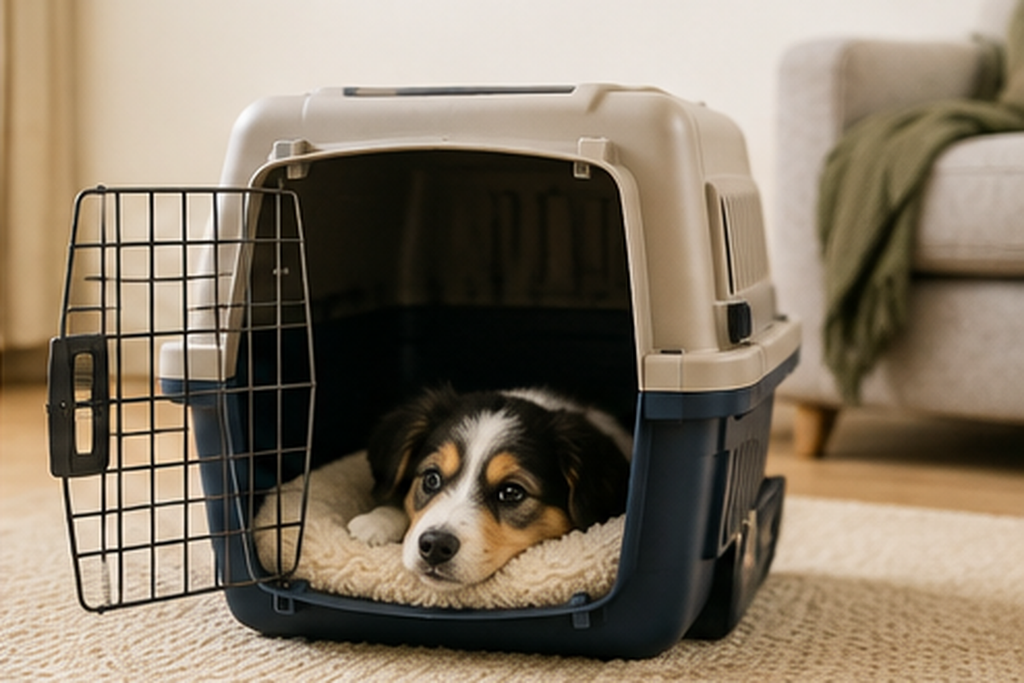
Best for Anxious Puppies: Plastic Den-Style Crate
The enclosed sides create a more cave-like, secure feeling, which can help a genuinely nervous puppy settle faster than an open wire crate. It’s also the crate you’ll want if you’re planning any air travel later, since most airline-approved carriers are built on this style.
Good for: puppies who seem stressed or overstimulated in an open wire crate; households planning to fly with their dog eventually.
Trade-off: less airflow than wire, and sizing up as your puppy grows usually means buying a second one rather than adjusting a divider.
Plastic den-style travel crate
Best Budget Pick: Basic Wire Crate (No Frills)
If you’re not sure yet whether crate training will click for your specific puppy, or you’re working with a tight starter budget, a basic wire crate without the divider panel or extra features does the core job. You’ll likely outgrow it faster, but it’s a reasonable way to start.
Good for: first-time owners testing the waters, or anyone prioritizing a lower upfront cost.
Trade-off: no divider panel means you’re likely buying a second crate as your puppy grows into an adult-size dog.
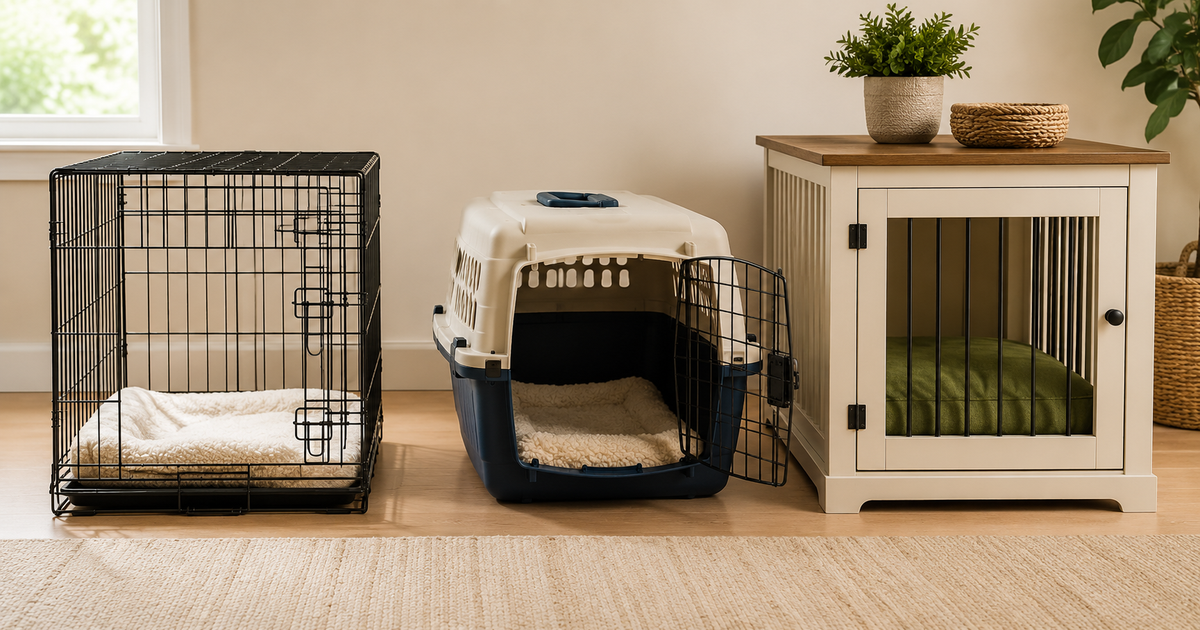
Best for Small Spaces: Furniture-Style Crate
Built to double as an end table or media stand, this style is worth the higher price if the crate needs to live in a living room or shared space where a standard wire crate feels visually intrusive.
Good for: apartments, small breeds, anyone who wants the crate to blend into the room instead of standing out.
Trade-off: costs more, and most furniture-style crates don’t include a divider panel, so sizing correctly from the start matters more here.
Sizing: The Part Most People Get Wrong
Size for your puppy’s expected adult weight, not their current size — this is exactly why the divider panel matters on wire crates. A crate that’s too large defeats the den effect that makes potty training work; your puppy should be able to stand, turn around, and lie down comfortably, with a little room to spare, not a whole extra room to wander and use as a bathroom.
How Long Can a Puppy Actually Stay Crated?
This is the question that decides whether a crate helps or backfires, and it’s tied directly to bladder control, not convenience. As a rough guide: a young puppy can typically hold it for about one hour per month of age, plus one, during the day — so a 3-month-old is roughly a 4-hour daytime max, with more stretch overnight once their metabolism slows down. Crating longer than that regularly isn’t just uncomfortable, it teaches a puppy to go to the bathroom in the crate, which undoes the entire point of using one. Our Potty & Crate Training guide has the full age-by-age schedule if you want the specifics beyond this rule of thumb.
What This Actually Costs
A basic wire crate typically runs $30-$60, while a divider-panel version that lasts through adulthood runs $50-$120 depending on size — genuinely one of the better value purchases in a puppy’s first year, since it replaces something you’d otherwise buy twice. Furniture-style and heavy-duty travel crates run higher, often $150-$300+. For where this fits in the bigger first-year budget, see our full breakdown in How Much Does It Cost to Own a Puppy?
FAQ
Wire or plastic — which should I actually buy? Wire with a divider panel is the right default for most puppies and most homes. Reach for plastic specifically if your puppy seems unusually anxious in open spaces, or if air travel is realistically on the horizon.
Do I need to buy a second, bigger crate as my puppy grows? Not if you buy a wire crate with a divider panel — that’s the entire point of the feature. Without one, plan on sizing up once around the midpoint of their expected growth.
How do I know if the crate is the right size? Your puppy should be able to stand without crouching, turn around fully, and lie down stretched out, with only a little extra space — not enough room to sleep in one end and go to the bathroom in the other.
Is it cruel to crate a puppy? Not when it’s used correctly — as a positive, den-like space for reasonable stretches, not as a punishment or an all-day containment solution. A puppy that whines the first few nights is normal; a puppy that consistently panics in a properly introduced crate is worth discussing with your vet or a trainer.
This post is general information, not veterinary or behavioral advice. If your puppy shows signs of true crate-related distress — panting, drooling, or injuring themselves trying to escape — talk to your vet or a certified trainer rather than pushing through it.
Haven’t worked out the rest of your gear list yet? See our Puppy Starter Kit guide for the full starter setup.
Ready to actually use the crate? Our Potty & Crate Training guide covers the schedule and method.