This post contains affiliate links. If you buy through one, we may earn a commission at no extra cost to you. See our Affiliate Disclosure for details.
Written by the Puppy Tackle team — we’ve spent time on the retail and Amazon marketplace side of the pet products industry before starting this site, and we bring that same “does this actually hold up” scrutiny to every pick here.
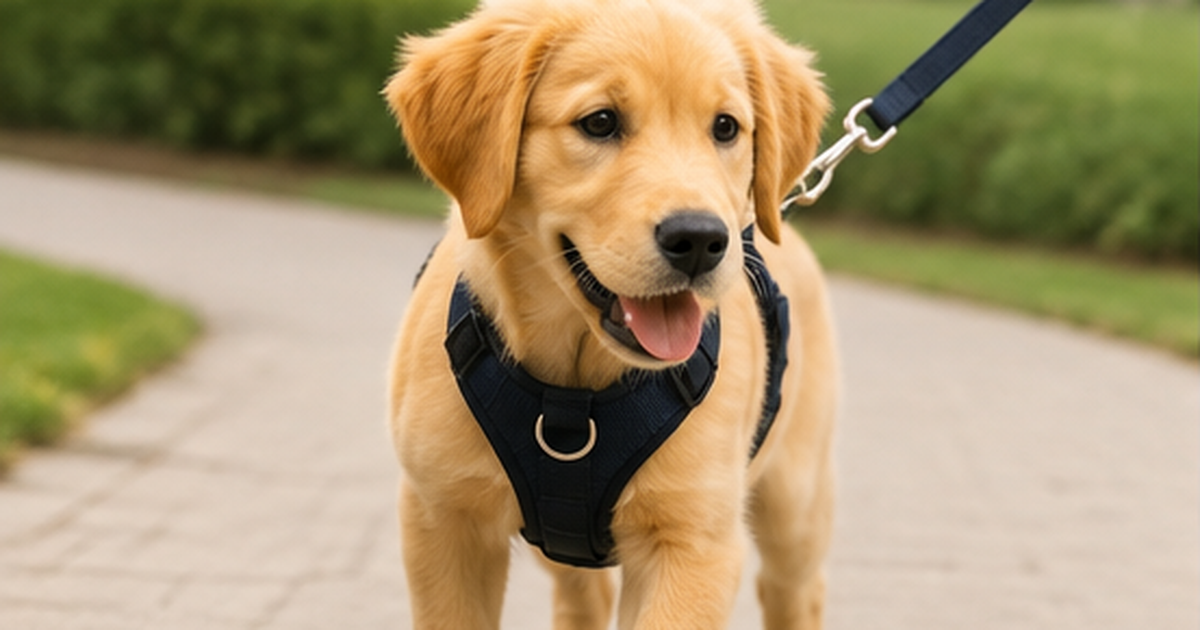
Our Puppy Starter Kit guide explains why a harness beats a collar for walks — it takes pressure off a puppy’s developing neck and trachea, and gives you more control if they lunge. VCA Animal Hospitals has a good collar vs. harness breakdown for puppies if you want the full veterinary reasoning behind that advice. This is the specific-picks version: which harness for which situation.
What We’re Judging On
Fit adjustability (puppies grow fast, and a harness with limited adjustment range gets outgrown in weeks), material and stitching quality at pressure points, ease of putting on a squirmy puppy, and whether it actually helps with pulling rather than just repositioning it.
Best Overall: Step-In Adjustable Harness
Step-in styles are the easiest to put on a wiggly puppy — no lifting legs through loops, no wrestling a vest over their head. Multiple adjustment points mean it keeps fitting through several growth spurts before you need to size up.
Good for: most puppies, most owners, especially anyone still working on getting their puppy comfortable with handling.
Trade-off: less structured support than a vest-style harness for a puppy that pulls hard.
Step-in adjustable puppy harness
Best for Pulling: Front-Clip Harness
Attaching the leash at the chest instead of the back changes the physics of a pull — instead of powering forward, a pulling puppy gets gently redirected sideways, which makes loose-leash walking easier to teach without any aversive tools.
Good for: puppies who lunge at other dogs, squirrels, or literally anything; anyone actively working on loose-leash walking.
Trade-off: the front strap can rub if it’s not sized correctly, so double-check fit more carefully with this style.
If you’re dealing with pulling that goes beyond what a front-clip harness solves on its own, PetSafe makes some of the most trusted training and containment gear in this category — worth a look alongside a harness, not instead of one.
Best for Tiny Breeds: Mesh Vest Harness
Small and toy breeds have more delicate tracheas and ribcages, and a soft mesh vest distributes pressure more evenly across the chest than a strap-style harness. It’s also generally more comfortable for short walks in cold weather since it covers more of the body.
Good for: toy and small breed puppies under roughly 15 lbs.
Trade-off: less durable under heavy pulling than a strap-style harness — not the pick for a strong or high-energy small breed.
Best for Growing Breeds: Fully Adjustable Multi-Point Harness
For large-breed puppies who’ll roughly double or triple in size over the first year, a harness with adjustment at the neck, chest, and belly gets significantly more mileage before it’s outgrown.
Good for: large and giant breed puppies, or any owner who wants to buy one harness and adjust rather than replace it every couple of months.
Trade-off: more straps means more time getting the fit right the first few times.
Multi-point adjustable harness
Getting the Fit Right
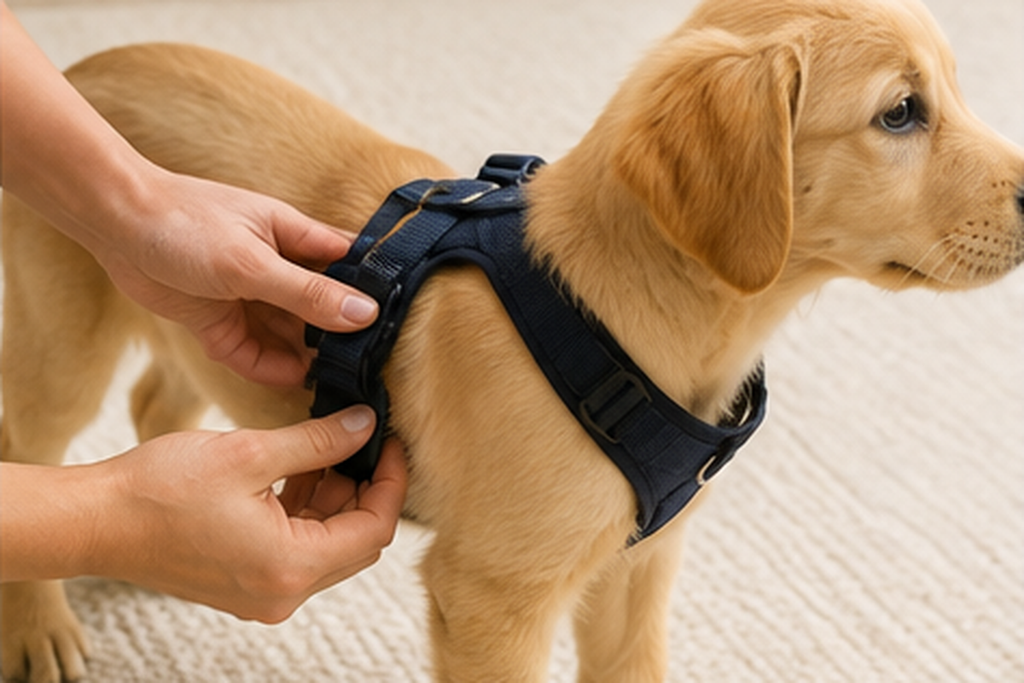
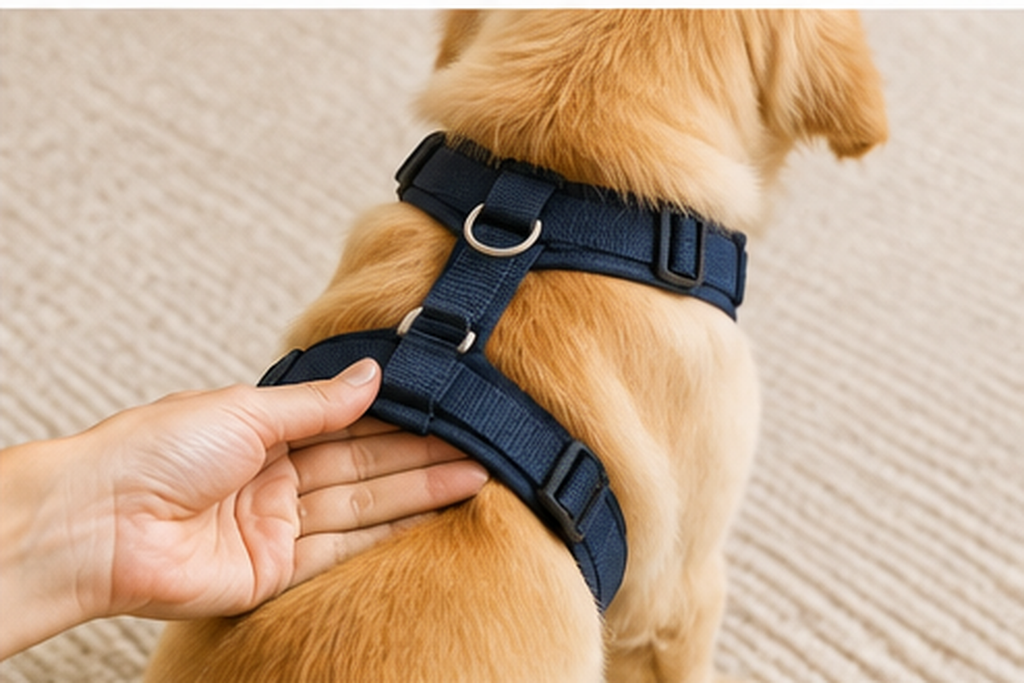
You should be able to fit two fingers, flat, between the harness and your puppy’s body at every strap — snug enough that they can’t back out of it, loose enough that it doesn’t restrict a full range of motion. Recheck fit every couple of weeks during a growth spurt; a harness that fit perfectly a month ago can be too tight faster than you’d expect.
Common Mistakes That Lead to Rubbing, Escape, or Injury
Most harness problems come down to one of these:
Sizing it for “now” instead of checking weekly. A puppy’s chest and neck measurements can change noticeably in two to three weeks during a growth spurt. A harness that was correctly snug a month ago can start pinching or, in the opposite direction, get loose enough to back out of.
Buying a “Houdini”-prone style for a puppy that backs out of things. Some puppies, especially ones anxious about handling, learn to back out of a loosely fitted harness in seconds. If this is your puppy, a step-in style with a chest strap (rather than a simple over-the-head loop) is much harder to slip.
Leaving it on unsupervised. Harnesses (and collars) left on in a crate or during unsupervised play can snag on furniture or crate wire. Take it off during downtime at home; it only needs to be on for walks and outings.
Ignoring rub marks. Red marks, thinning fur, or a puppy who flinches when the harness goes on are all signs of a poor fit — don’t wait for a walk-related complaint to check.
FAQ
Is a harness really better than a collar for walks? Yes, for walking specifically — a collar is fine for everyday wear and ID, but a harness protects a puppy’s developing neck and trachea from the pressure of pulling or a sudden lunge.
How do I know if my puppy has outgrown their harness? If you can’t get the two-finger gap at every strap even at the loosest setting, or you see red marks or fur rubbing after walks, it’s time to size up.
What’s the actual difference between front-clip and back-clip? Back-clip is more comfortable for a puppy who already walks reasonably well on leash. Front-clip is the better training tool for a puppy still learning not to pull, since it redirects rather than rewards forward momentum.
How much should a good puppy harness cost? Expect to spend roughly $15-$35 for a solid adjustable harness. Because puppies grow, budget for sizing up once or twice in the first year rather than buying the most expensive option up front — see our full first-year cost breakdown in How Much Does It Cost to Own a Puppy?
This post is general information, not veterinary advice. If your puppy shows ongoing coughing, gagging, or wheezing regardless of what they’re wearing on walks, talk to your vet — that can be a sign of tracheal sensitivity unrelated to gear choice.
Haven’t sorted the rest of your walking gear? See our Puppy Starter Kit guide for collars, ID tags, and leash recommendations.