This post contains affiliate links. If you buy through one, we may earn a commission at no extra cost to you. See our Affiliate Disclosure for details.
Potty training and crate training aren’t two separate projects — they’re the same project. A crate works because dogs instinctively avoid soiling where they sleep, which means it becomes your single best tool for teaching bladder control on a schedule you control, instead of cleaning up after the fact.
Here’s the actual schedule and method, not just “be patient” advice.
Why Crate Training Comes First
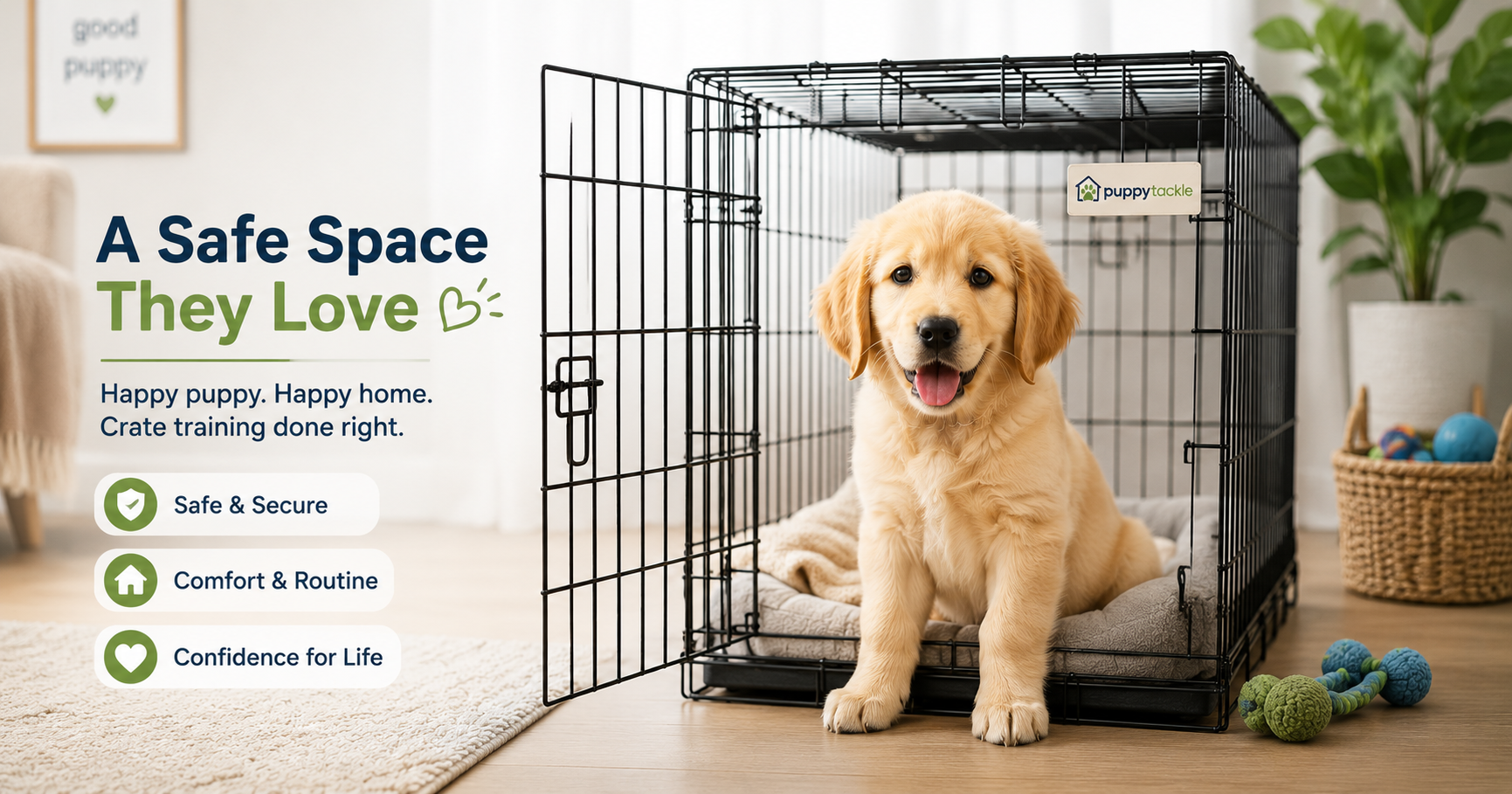
Before you can potty train effectively, your puppy needs a “den” — a space small enough that they won’t want to go to the bathroom in it, but comfortable enough that they’re not stressed being there. That’s the crate’s job.
How to introduce it right:
- Never use the crate as punishment — it should always be a calm, positive space
- Start with short stretches (10-15 minutes) while you’re home, so they don’t associate it with being left alone
- Feed meals in or near the crate early on to build a positive association
- Gradually extend crate time, including short periods when you leave the house
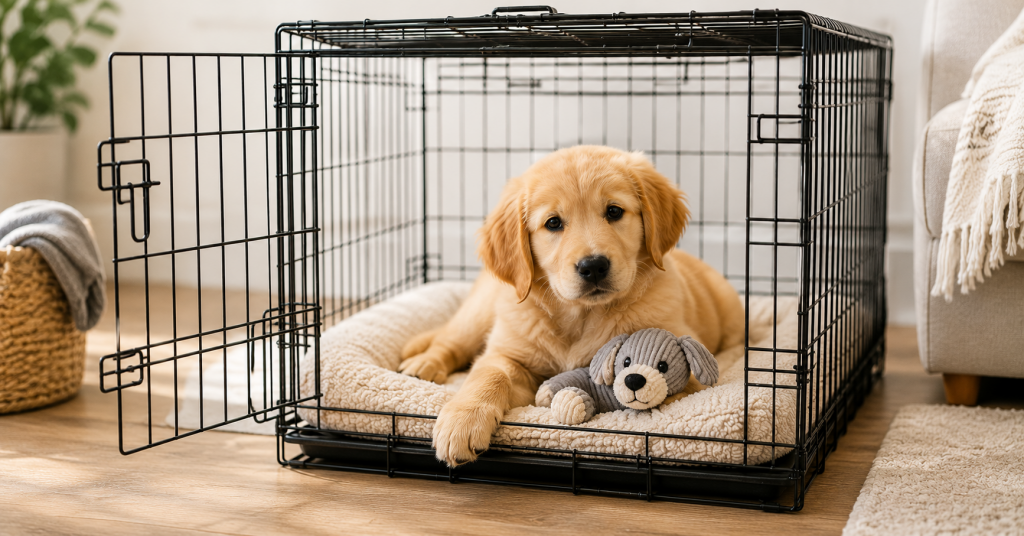
If you haven’t picked out a crate yet, our Puppy Starter Kit guide covers exactly what to look for, including the divider panel trick that saves you from buying two crates.
The Potty Training Schedule That Actually Works
The core rule: take your puppy out immediately after they wake up, after they eat or drink, and after playtime — these are the three moments a puppy is almost guaranteed to need to go.
Age-based bladder control guide (rough rule of thumb):
| Puppy Age | Approx. Hours They Can Hold It |
|---|---|
| 8-10 weeks | 1 hour |
| 10-12 weeks | 2 hours |
| 3-4 months | 3-4 hours |
| 4-6 months | 4-5 hours |
| 6+ months | 5-6 hours |
A common rule of paw: a puppy can generally hold it for about one hour per month of age, plus one — so a 3-month-old puppy is roughly a 4-hour hold, max, during the day. Overnight, most puppies can stretch longer since their metabolism slows down.
A sample daily schedule for an 10-12 week old puppy:
- 6:30am — wake up, straight outside
- 7:00am — breakfast, then outside 15-20 min later
- 9:00am — outside (after morning play/nap)
- 11:00am — outside
- 12:00pm — lunch, then outside 15-20 min later
- 2:00pm — outside
- 4:00pm — outside (after play/nap)
- 5:30pm — dinner, then outside 15-20 min later
- 7:30pm — outside
- 9:30pm — last outside trip before bed
This looks like a lot because it is — the first few weeks are genuinely intensive. It gets dramatically easier as bladder control develops.
What to Do When Accidents Happen (Because They Will)
Never punish an accident after the fact — your puppy won’t connect the correction to something that happened minutes ago, it just teaches them you’re unpredictable. This lines up with the AVSAB position on humane, reward-based training, which found no evidence that punishment-based methods work better than reward-based ones. Instead:
- If you catch them mid-accident, calmly interrupt and take them outside immediately
- Clean the spot with an enzymatic cleaner, not a regular household cleaner — regular cleaners don’t fully remove the scent markers that draw a puppy back to the same spot (we cover this in the Puppy Starter Kit guide)
- Go back to a tighter supervision schedule for a few days if accidents start increasing — it usually means you’ve given too much freedom too soon
Common Mistakes That Slow This Down
Inconsistent schedule. Potty training runs on predictability. A schedule that changes every day confuses the pattern you’re trying to build.
Too much freedom, too early. A puppy who has full run of the house before they’re reliably trained will find a corner you don’t check often. Use baby gates or a leash tether indoors during the early weeks to keep them in sight.
Punishing after the fact. Covered above, but worth repeating — it doesn’t work and can create anxiety around going to the bathroom in front of you at all, including outside.
Skipping the overnight routine. A last-call trip right before bed and a first-thing trip the moment they wake up are non-negotiable, especially in the first month.
When to Bring in Extra Help
If you’re past the 4-5 month mark and still struggling significantly, or if training in general — not just potty — feels harder than it should, a structured training program can help more than piecemeal YouTube videos. Brain Training for Dogs is a well-regarded structured, at-home program that goes beyond potty training into obedience and behavior work, and it’s worth a look if you want a guided curriculum rather than figuring it out solo.
FAQ
How long does potty training usually take? Most puppies are largely reliable by 4-6 months with consistent training, though full reliability (including holding it through a full night or a long car ride) can take up to a year.
Should I use potty pads instead of going outside? Pads can work as a bridge, especially in apartments or bad weather, but they can also confuse the “only go outside” message. If you use them, be consistent about phasing them out once your puppy is a bit older.
Is it normal for training to regress? Yes — regressions during teething, a schedule change, or a stressful event (new home, new pet) are common and not a sign you’re doing something wrong. Go back to a tighter schedule for a week or two and it usually resolves.
Haven’t sorted your gear yet? Our Puppy Starter Kit guide covers the crate, enzymatic cleaner, and everything else this schedule depends on.
Feeding times and potty times are linked — see our Fresh Food vs. Kibble guide if you haven’t settled on a feeding routine yet.
Want the full picture, including gear, feeding, and health costs? See our Complete New Puppy Checklist.