This post contains affiliate links. If you buy through one, we may earn a commission at no extra cost to you. See our Affiliate Disclosure for details.
Written by the Puppy Tackle team — we’ve spent time on the retail and Amazon marketplace side of the pet products industry before starting this site, and we bring that same “does this actually hold up” scrutiny to every pick here.
Our Puppy Starter Kit guide covers the basic idea: teething starts around 3-4 months and it doesn’t stop until it stops, so the goal is redirecting the chewing, not fighting it. The AKC’s guide to puppy teething and nipping is a good primer on the timeline and why it happens, if you want the full picture before you start shopping. Here’s which specific toys actually do that job, by texture and situation.
What We’re Judging On — Durability against a determined chewer, safety (no small parts that break off), whether the texture actually appeals to a teething puppy specifically, and if it’s easy to clean.
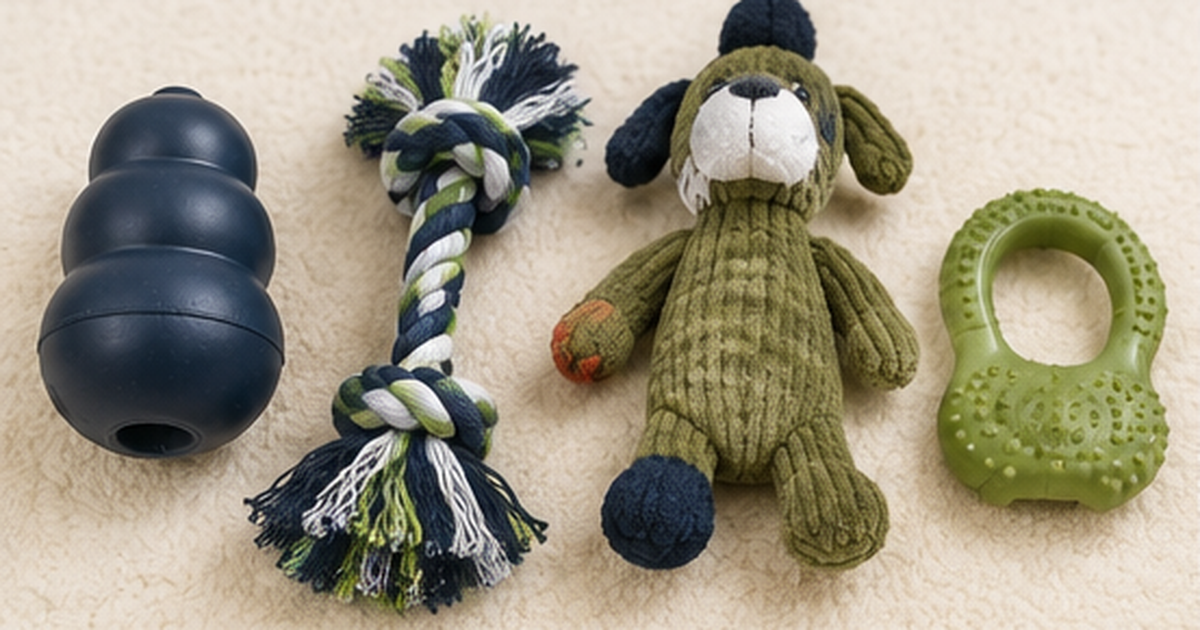
Best for Sore Gums: Freezable Rubber Teether — Cold soothes inflamed gums the way ice helps a human toothache. Good for the peak teething window (3-4 months), especially fussy evenings. Trade-off: needs freezer lead time. [AFFILIATE: Freezable rubber puppy teether — Amazon]
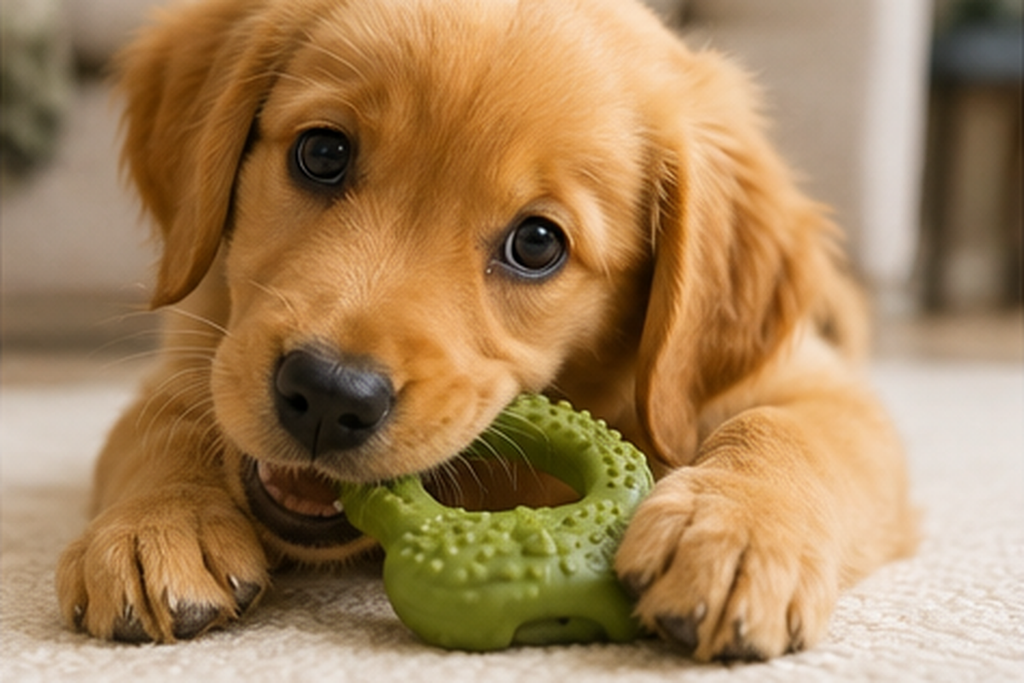
Best All-Around: Textured Rubber Chew Toy — Varied ridges, holds up better than soft materials to daily use. Trade-off: aggressive chewers can wear through it — check regularly. [AFFILIATE: Textured rubber chew toy — Amazon]
Best for Interactive Play: Rope Tug Toy — Doubles as chew outlet and tug game, good for puppies who nip during play. Trade-off: fraying fibers can be swallowed — retire at first sign of unraveling. [AFFILIATE: Rope tug chew toy — Amazon]
(image 10c: new rope toy next to a frayed one, showing when to retire it)
Best for Independent Chewing: Stuffable Rubber Toy — Stuff with food/filling, useful during crate training or alone-time practice. Needs supervision early on. [AFFILIATE: Stuffable rubber chew toy — Amazon]
Best for Small/Toy Breeds: Soft Plush Squeaker (Chew-Adjacent) — Sized right for smaller mouths and less bite force. Not for determined destroyers — swap at first torn seam. [AFFILIATE: Small-breed plush chew toy — Amazon]
What to Skip — Rawhide (choking/blockage risk); anything with small detachable parts (squeakers, plastic eyes); adult-sized toys on a young puppy.
When to Retire a Chew Toy (Don’t Wait for “Almost Gone”) — Check the rotation every couple weeks for fraying/unraveling rope, cracks or bite-through spots on rubber, loose seams on plush. Rule of thumb: if you’re asking “is this still okay?”, it isn’t. A 2-3 toy rotation makes this easier than running one toy to failure.
What This Actually Costs — Roughly $20-$40/month during peak teething (3-6 months), tapering after. Full picture in How Much Does It Cost to Own a Puppy?
FAQ
- How many toys in rotation? 2-3.
- Puppy ignores the toy and chews furniture instead? Try a different texture; redirect actively a few times.
- When does teething end? Mostly by 6-7 months, though breed-level chewing drive can persist as personality, not teething.
- Is a little blood while teething normal? Yes, from a loose baby tooth. Ongoing bleeding, swelling, or not eating — call the vet.
This post is general information, not veterinary advice. If your puppy is chewing unusually aggressively, seems to be in pain, or you suspect they’ve swallowed something they shouldn’t have, contact your vet right away.
Need the rest of the starter gear list? See our Puppy Starter Kit guide for crates, bowls, and grooming basics.